Who Was St. John Chrysostom, Doctor of the Church?
Who was St. John Chrysostom?
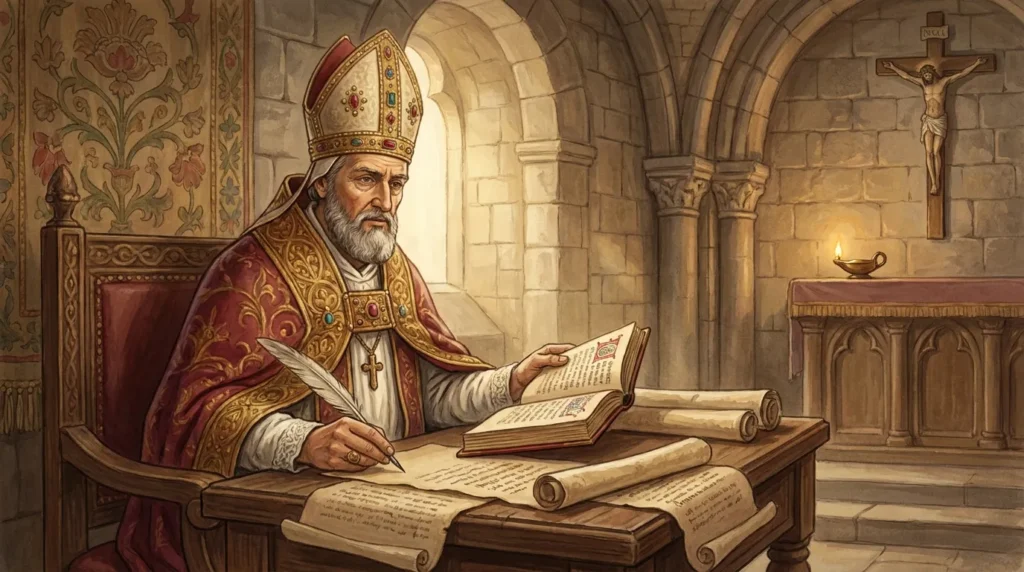
St. John Chrysostom is one of the great Doctors of the Church, known for his eloquence, courage in preaching, and defense of the truth of the Gospel. Called the “golden-mouthed” (from the Greek Chrysostomos), he left a lasting mark on the early Church and continues to inspire Christians worldwide.
Born around 349 A.D. in Antioch (modern-day Turkey), John stood out early for his intelligence and gift for oratory. After a profound conversion, he dedicated himself to the study of Scripture and monastic life.
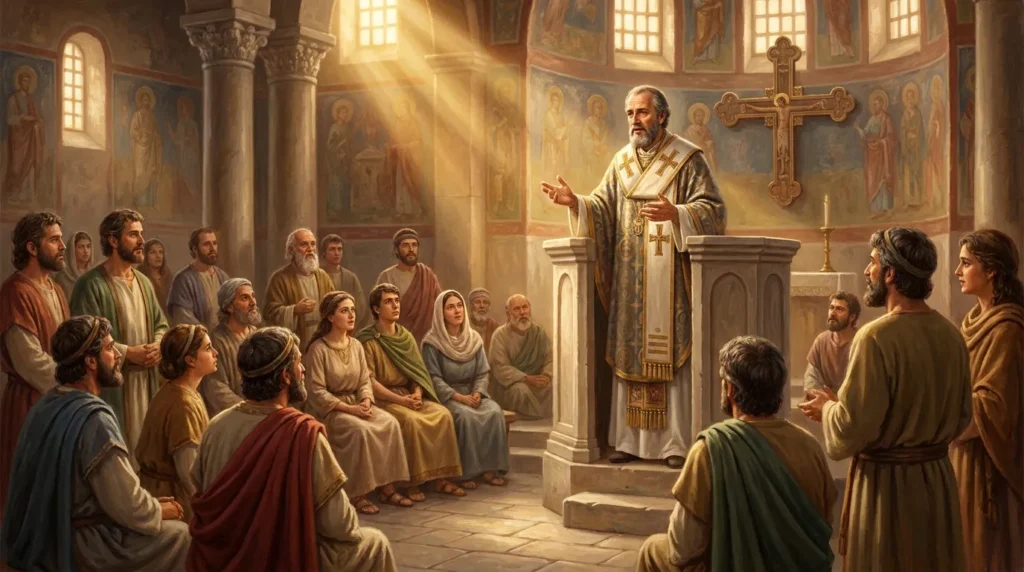
He was ordained a priest and became one of the most influential preachers of his time. His clear, practical, and deeply biblical preaching won the hearts of the people but also created opposition among the powerful, since he did not hesitate to denounce social injustices and corrupt behavior.
In 398 A.D., he was appointed Patriarch of Constantinople. Despite political intrigues and persecution, which even led to his exile twice, he remained steadfast in proclaiming the truth of the Gospel.
Why is he called “Chrysostom”?
The title Chrysostom means “golden-mouthed,” a reference to his extraordinary ability to preach and teach with clarity, depth, and beauty. His homilies were accessible to ordinary people yet filled with theological wisdom, making him one of the greatest orators in Christian history.
What is his importance for the Church?
St. John Chrysostom is considered one of the four great Doctors of the Eastern Church and is venerated both by the Catholic Church and the Orthodox Church.
His contributions include:
- Biblical preaching and exegesis – He explained Scripture in a practical and transformative way.
- Defense of Christian morality – He denounced luxury, injustices, and the excesses of the imperial court.
- Reform of the clergy – He sought greater integrity and simplicity among ministers of the Church.
- Liturgical spirituality – His liturgy is still celebrated in Eastern Churches today (the Divine Liturgy of St. John Chrysostom).
What does his legacy teach us today?
- Courage to proclaim the truth – even when it brings opposition.
- Simplicity in preaching – the Word must be clear and accessible to everyone.
- Care for the poor and needy – he viewed charity as the true mark of Christianity.
- Faithfulness in persecution – his life shows that the truth of the Gospel is worth more than human approval.
Conclusion
St. John Chrysostom challenges us to live an authentic Christianity—one that does not remain silent in the face of injustice and that keeps God’s Word at the center of life. His memory, celebrated on September 13 by the Catholic Church, reminds us that eloquence without commitment cannot transform, but truth preached with love and courage can impact generations.
If this article inspired you, share it with your friends and family.
📖 Looking for a Bible passage? Visit The Holy Bible Online, choose a translation, select a book, and start reading. →
📌 Original Content Notice: This article was originally published on The Holy Bible Online Blog. All rights reserved.
The reproduction, copying, or redistribution of this content, in whole or in part, without prior authorization is prohibited. Our content is created with biblical research, editorial care, and human review to help readers explore Scripture with clarity, respect, and faith-centered understanding.