Amos and Honest Scales: Why Everyday Integrity Matters to God
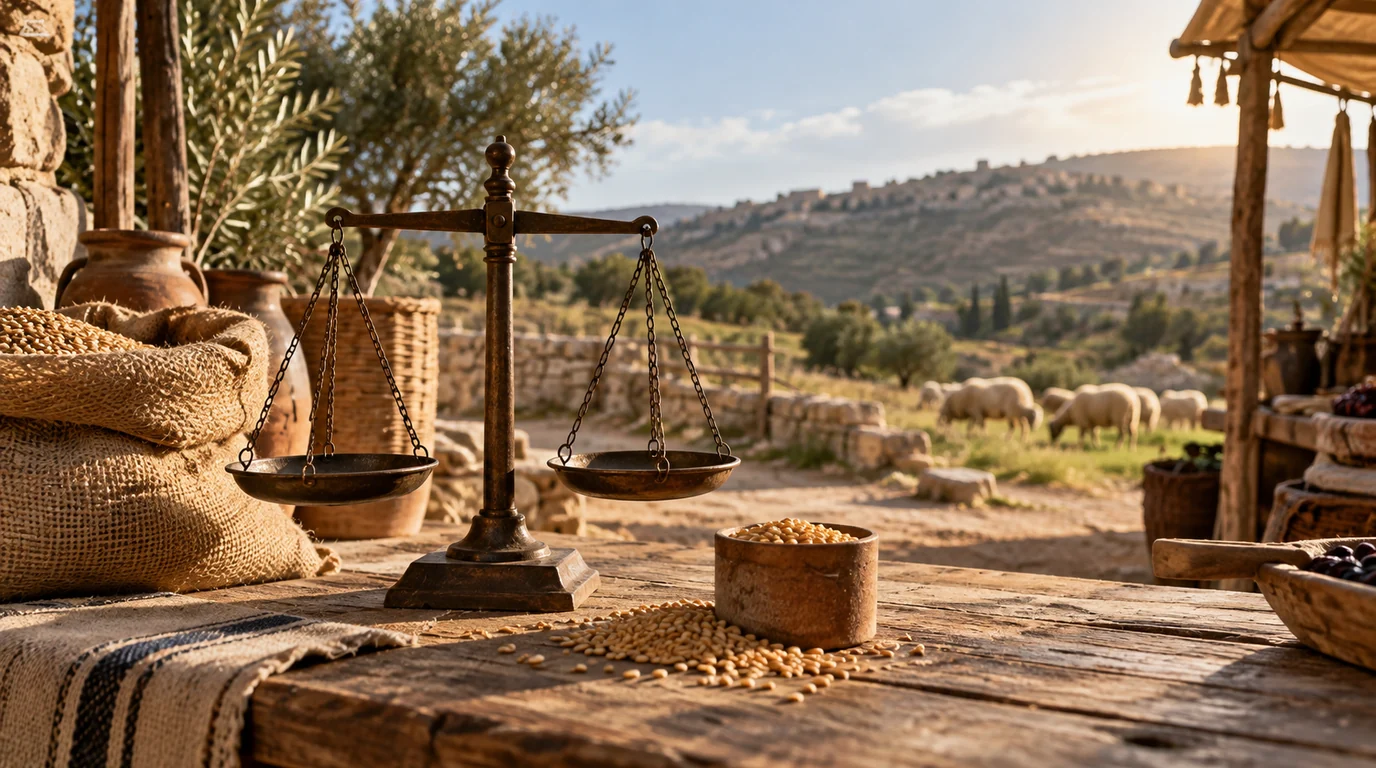
A scale can look balanced from a distance while hiding a dishonest weight. The prophet Amos brought a similar question to the people of Israel: did their public worship match the way they treated other people? His book does not leave faith inside a gathering place. It follows people into the market, the courtroom, and the choices they make when someone with less power is affected.
Amos is worth reading because his message is both uncomfortable and constructive. He names exploitation plainly, yet he also calls people to seek what is good. His words invite us to examine ordinary habits without pretending that one act of kindness can erase a pattern of injustice.
A shepherd sent to speak
Amos 1:1 introduces Amos as one of the herdmen of Tekoa and locates his message in the days of Uzziah and Jeroboam. Later, when Amaziah tells him to leave Bethel, Amos explains that his authority does not come from a prophetic family line. He had been tending a flock when the Lord sent him to speak to Israel (Amos 7:12-15).“And the Lord took me as I followed the flock, and the Lord said unto me, Go, prophesy unto my people Israel.” Amos 7:15 (KJV)This scene matters because Amaziah tries to determine where Amos may speak. Amos responds by pointing back to the call he received. The story gives no reason to romanticize rural work or dismiss formal learning. It simply shows that the message must be weighed by its truth, even when the messenger is unwelcome.
The problem behind the scales
Amos does more than criticize vague dishonesty. He describes people waiting impatiently for religious observances to end so that they can return to selling grain. Their plan is to reduce the measure, raise the price, and tamper with the scales (Amos 8:4-6). The buyer may not even see the deception. The seller sees it and chooses it anyway.“making the ephah small, and the shekel great, and falsifying the balances by deceit” Amos 8:5 (KJV)The passage links dishonest transactions with harm to the needy. This is more than a warning about individual manners. It asks what happens when a system rewards someone for taking advantage of a person who has few alternatives. Amos 2:6-7 also condemns those who treat the poor as expendable and turn aside the way of the meek. We should be careful about drawing a straight line from an ancient grain market to every modern economic question. The setting is different. The moral question remains clear: are we telling the truth about what we offer, what it costs, and whom our decisions burden?
Why worship and justice belong together
In Amos 5:21-23, God rejects festivals, offerings, and songs from a community that refuses to live rightly. Amos is not saying that prayer or worship have no value. He is confronting a contradiction: people cannot use outward devotion to excuse the harm they practice elsewhere. The next verse gives the image that has carried his message through generations.“But let judgment run down as waters, and righteousness as a mighty stream.” Amos 5:24 (KJV)“Judgment” here belongs alongside righteousness, not alongside a quick impulse to condemn a neighbor. Read the surrounding chapter: Amos tells his hearers to seek good, not evil, and to establish judgment in the gate (Amos 5:14-15). The gate was where public matters were decided in the world of the text. His call reaches decisions that shape a community, as well as private character. This is why Amos can challenge a person who prays sincerely and still overlooks an unfair practice. The response is not to abandon prayer. It is to let prayer make us more honest about the way we live.
Practicing integrity in ordinary decisions
Most of us do not sell grain with an ancient scale. We do, however, make promises, set prices, describe work, share information, and decide whose concerns receive our attention. Amos offers a useful set of questions before the next decision:- Is the measure honest? Describe a product, service, or commitment accurately. Do not hide a limitation that would matter to someone making a choice.
- Who bears the cost? Ask whether convenience for you creates an unfair burden for someone with less room to object.
- Can the person affected be heard? Make space for a complaint or correction without punishing the person who raises it.
- What should be repaired? If you discover that you benefited from an unfair action, acknowledge it and take a concrete step to make it right.