The Bereans in Acts 17: How to Test What You Hear
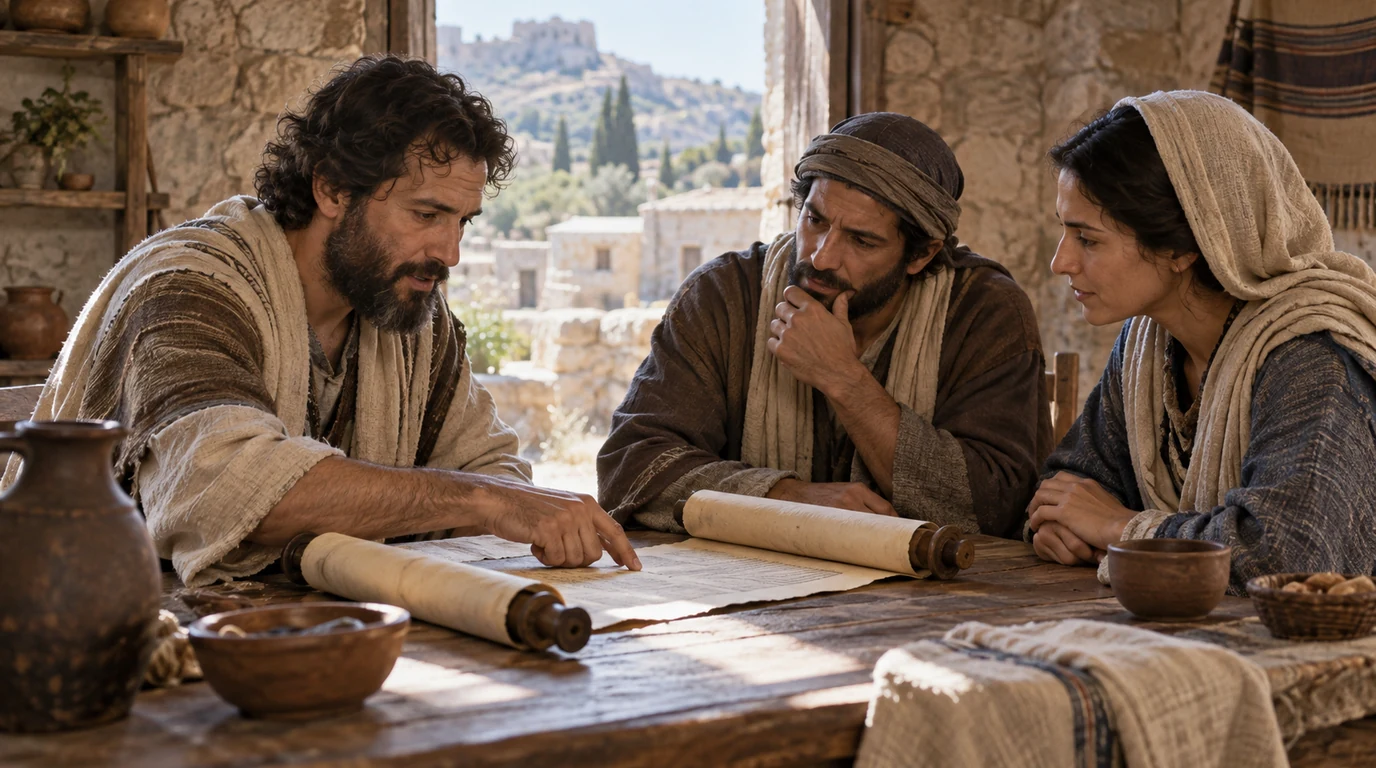
A sermon sounds convincing. A short video quotes a verse. A friend says, “The Bible clearly teaches this.” How can you listen with an open heart while still checking whether a claim is true? Acts 17 gives a helpful example: the people who heard Paul in Berea welcomed his message and examined the Scriptures.
Their example is useful for anyone learning to read the Bible carefully. You do not need to become suspicious of every teacher or pretend that you already know every answer. You can listen, open the passage, ask honest questions, and give yourself time to understand.
Who were the Bereans?
In Acts 17:1–3, Paul speaks in the synagogue at Thessalonica. He reasons from the Scriptures, explaining that the Christ had to suffer and rise from the dead, and proclaiming Jesus as the Christ. Some listeners believe, but opposition follows. The believers send Paul and Silas to Berea by night, where they again enter a synagogue.
Luke then describes how the listeners in Berea respond:
“These were more noble than those in Thessalonica, in that they received the word with all readiness of mind, and searched the scriptures daily, whether those things were so.”
Acts 17:11 (KJV)
The verse holds two actions together: receiving the message readily and checking it carefully. Acts 17:12 reports that many believe. Their investigation leads toward faith; it is not described as an excuse to avoid considering Paul's message.
The Scriptures they examined were the sacred writings already available to them, rather than a completed New Testament collection. Luke does not name the individual passages they consulted. We should therefore avoid inventing a list of texts or claiming that we know their exact study routine.
Readiness and discernment belong together
A willing listener can still ask for evidence. The Bereans do not accept Paul's claims merely because he is confident, and they do not dismiss him merely because his message requires thought. They bring what they hear into conversation with Scripture.
This matters when a speaker is familiar, popular, or personally encouraging. A helpful voice can guide your reading, but a speaker's reputation cannot replace the text. The same is true of an article, including this one: use its references as invitations to examine the passages yourself.
Paul gives another brief instruction in 1 Thessalonians 5:19–22. He warns against quenching the Spirit and despising prophecies, while also calling for examination:
“Prove all things; hold fast that which is good.”
1 Thessalonians 5:21 (KJV)
In this context, “prove” means to test or examine. Openness does not mean accepting everything. Discernment does not mean rejecting everything. The aim is to recognize what is good and hold on to it.
How to check a biblical teaching
1. Identify the actual claim
Before collecting verses, put the teaching into a plain sentence. Is the speaker explaining a passage, giving practical advice, or promising a particular outcome? Those are different kinds of claims.
For example, “Scripture can instruct and correct us” is a claim you can compare with 2 Timothy 3:16–17. “If you follow this routine, nothing difficult will happen this week” is a much broader promise. Ask which part of the passage supports the exact statement, rather than treating a nearby Bible quotation as proof of everything said.
2. Read the passage before and after the verse
A verse belongs to a paragraph, a chapter, and a book. Notice who is speaking, who is being addressed, and what question or situation the passage concerns. Read far enough to follow the author's thought.
Acts 17:11 becomes clearer when you read Acts 17:1–12. You discover what Paul is proclaiming and what the Bereans are examining. Isolating the verse can make the story sound like a general lesson in arguing; its immediate subject is the message about Jesus.
Also notice the kind of writing you are reading. A narrative reports events. A proverb offers wisdom. A letter addresses its readers. These forms require attention to their context; they should not all be treated as identical lists of instructions.
3. Separate the words on the page from your conclusion
Write down what the text states directly before explaining what you think follows from it. The distinction helps you see where interpretation begins.
Acts 17:11 says that the Bereans searched daily. It does not give a required number of minutes, describe a particular notebook method, or promise that every sincere reader will immediately agree on every question. A daily reading habit is a reasonable application; presenting your preferred schedule as a command from this verse would go beyond its wording.
4. Compare relevant passages carefully
Other passages can help illuminate the subject, but collecting a long list is not enough. Read each reference in context and explain how it connects.
In Luke 24:25–27, Jesus explains the Scriptures concerning himself to the travelers on the road to Emmaus. This helps us appreciate the focus of Paul's preaching in Acts 17:3. For further reading, our article on Jesus' teaching on the road to Emmaus explores that scene.
In 2 Timothy 3:14–17, Paul urges Timothy to continue in what he has learned and describes Scripture's role in instruction, correction, and preparation for good works. Careful reading should shape how we live, not merely give us material for winning an argument.
5. Ask questions without rushing to an accusation
If a teaching seems unclear, ask, “Could you show me how you reached that conclusion from this passage?” Listen to the explanation. Sometimes a disagreement comes from an unclear phrase; sometimes it concerns a substantial interpretation.
Our study of James 1:19 and listening before answering offers a useful companion to this habit. Patience gives you room to understand another person's reasoning while still examining it honestly.
You may need help from a thoughtful teacher or mature reader. Christians sometimes differ about difficult passages. Acknowledge uncertainty where it remains, and distinguish a text's clear statement from a conclusion that requires further discussion.
A simple practice for your next reading
Choose one teaching you have recently heard. Set aside an unhurried moment and try this:
- Write its main claim in one sentence.
- Open the cited passage and read the surrounding paragraph.
- Note what the passage actually says, including its audience and subject.
- Record one question you still have.
- Identify one response the passage calls for in your own life.
You might discover that the teaching is well supported. You might find that it needs qualification. You might need more time. Each result is more useful than sharing a claim before you have examined it.
The word “daily” in Acts 17:11 also invites steady attention. Returning to Scripture can help you notice details that a hurried reading misses. Start with a manageable passage and read it thoughtfully rather than measuring your progress only by how many chapters you finish.
Common questions about the Bereans
Does checking a teacher mean I lack faith?
Acts 17:11–12 presents examination and belief together. Checking a claim against Scripture can be part of responding faithfully. The attitude matters: seek understanding, remain willing to learn, and avoid treating every conversation as a contest.
Do I need to understand the whole Bible first?
No. Begin with the passage in front of you. Read its context, use clear references, and ask for help when necessary. Learning takes time. Being honest about what you do not understand is better than repeating an explanation you cannot yet follow.
Receive, examine, and respond
The Bereans give us a practical pattern: listen willingly, examine patiently, and respond to what you find. Their search concerns the truth of the message about Jesus. As you read Acts 17:10–12, let their example encourage a habit of opening Scripture for yourself, asking careful questions, and allowing what you learn to shape your faith and conduct.