Heaven and the New Jerusalem: Final Hope Between Judgment and Promise
Heaven and the New Jerusalem: Final Hope Between Judgment and Promise
The Bible presents, in its final chapters, one of the most powerful visions for Christians: the New Jerusalem, the heavenly city described in the book of Revelation. It represents the fulfillment of God’s promises, when there will be no more pain, tears, or death.
In this article, we will explore the biblical meaning of the New Jerusalem, what it symbolizes in God’s plan, how it relates to heaven, and why this vision is a source of hope for Christians even in the midst of final judgment.
Where Does the New Jerusalem Appear in the Bible?
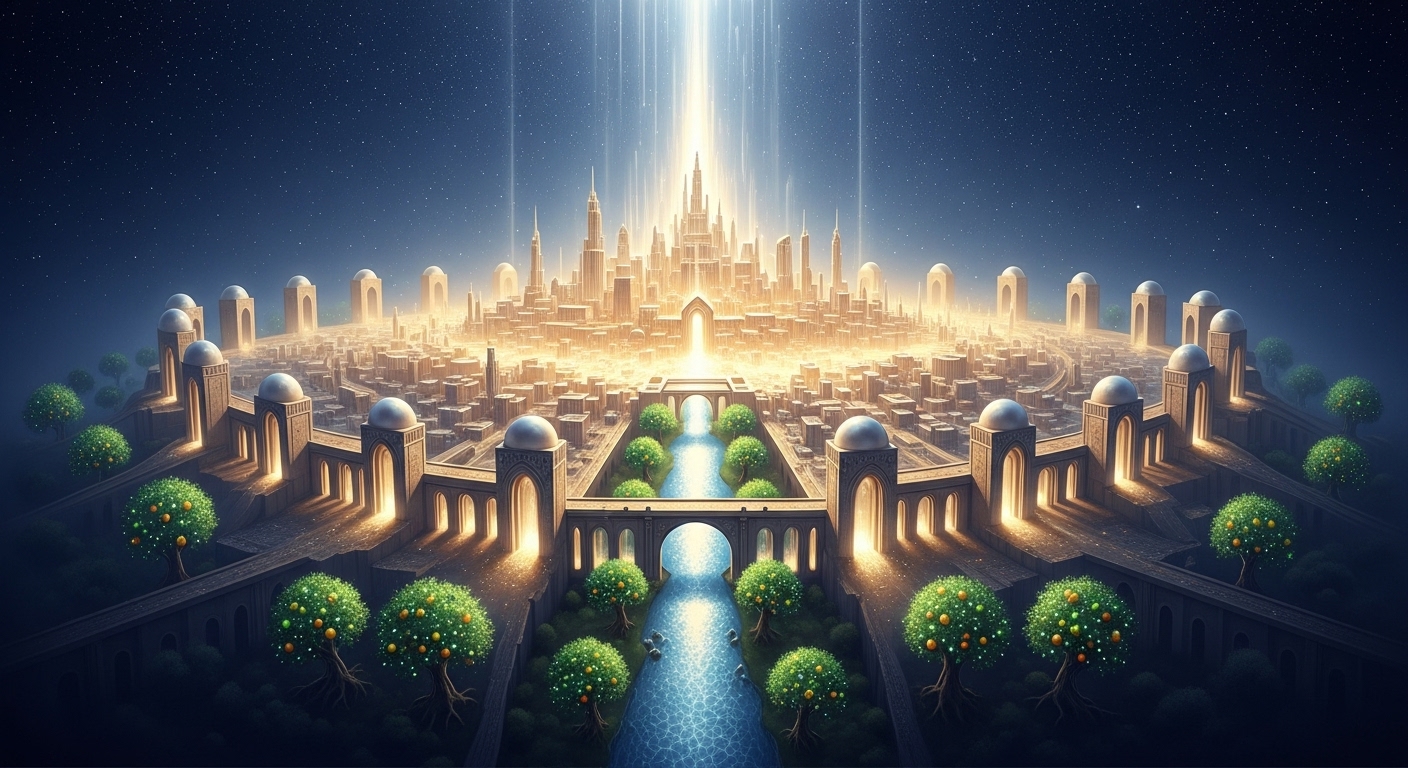
The term “New Jerusalem” appears in the book of Revelation, especially in chapters 21 and 22. The apostle John describes the city as “coming down out of heaven from God, prepared as a bride adorned for her husband.” The imagery is glorious, beautiful, and definitive, marked by God’s full presence with His people.
This new city contrasts with the old earthly Jerusalem, often marked by war, destruction, and idolatry. Here, Jerusalem is renewed, transformed, and eternal, signaling the ultimate fulfillment of God’s promises.
The Biblical Meaning of the New Jerusalem
The meaning of the New Jerusalem can be understood in several dimensions:
- Fullness of God’s presence: the city symbolizes the place where God dwells forever with His people, removing all spiritual separation.
- The end of suffering: in the New Jerusalem there will be no mourning, pain, or death, in contrast with the brokenness of the present world.
- A symbol of restoration: the city represents not only the end of history but also the renewal of creation, restored to God’s original design.
- Contrast with Babylon: while Babylon represents corruption and judgment, the New Jerusalem symbolizes holiness and eternal life.
Heaven and the New Jerusalem: What Is the Relationship?
Many Christians wonder whether heaven and the New Jerusalem are the same. Heaven is the eternal state of communion with God, while the New Jerusalem is the concrete and symbolic image of that communion, presented as a city. In other words, the New Jerusalem is the visible and glorious manifestation of eternal life in heaven, where the redeemed humanity dwells in God’s presence.
Characteristics of the New Jerusalem in Revelation
Revelation describes the New Jerusalem in great detail, rich in symbolism:
- Perfect dimensions: the city has a cubic shape, reminiscent of the Holy of Holies in the Temple, the place of God’s presence.
- Precious materials: gold, jasper, pearls, and precious stones emphasize the glory and purity of the city.
- No temple: there is no temple in the city, because God Himself and the Lamb are its temple.
- Eternal light: there is no need for sun or moon, for the glory of God illuminates it.
- River and tree of life: symbols of provision, healing, and eternity, echoing the restored Eden.
Judgment and Promise
The vision of the New Jerusalem cannot be separated from the context of final judgment. Before describing the city, Revelation portrays the fall of Babylon and the defeat of the enemy. This shows that the hope of the New Jerusalem comes after judgment upon evil. For Christians, this is a great comfort: suffering will not have the final word. God will bring justice, eliminate evil, and fulfill His promise of eternal life with those who persevered in faith.
Practical Lessons for the Christian Life
The New Jerusalem is not just a future hope but also an inspiration for Christian living today. It reminds us that:
- The Christian’s true homeland is in God, not in earthly cities or structures.
- Present suffering is temporary compared to the eternal promise of communion with the Lord.
- Living in holiness means anticipating, here on earth, the reality of heaven.
- The mission of the Church is to proclaim this hope, showing the world that there is life beyond judgment.
Frequently Asked Questions About the New Jerusalem
Is the New Jerusalem literal or symbolic? The description is symbolic but points to a concrete reality: eternal life with God.
Who will dwell in the New Jerusalem? Only those redeemed by the blood of the Lamb, whose names are written in the Book of Life.
Will there be suffering in heaven? No. The promise is clear: God will wipe away every tear.
What is the difference between heaven and the New Jerusalem? Heaven is eternal communion with God; the New Jerusalem is the image that represents that reality in visible and glorious form.
Biblical Passages for Study
- Revelation 21:1-27 – detailed description of the New Jerusalem.
- Revelation 22:1-5 – the river of life and the tree of life.
- Hebrews 11:10; 13:14 – the heavenly city sought by the patriarchs of faith.
- John 14:2-3 – Jesus’ promise to prepare a place for His followers.
Conclusion
The New Jerusalem is the ultimate expression of Christian hope. Between judgment and promise, it emerges as the sign of God’s final victory over evil and eternal communion with Him. Studying its biblical meaning reminds us that this vision is not only a future consolation but also a present call to live with faith, holiness, and hope.
If this article blessed you, share it with your friends and family!