Jehoshaphat's Prayer: Leading Honestly When You Have No Answer
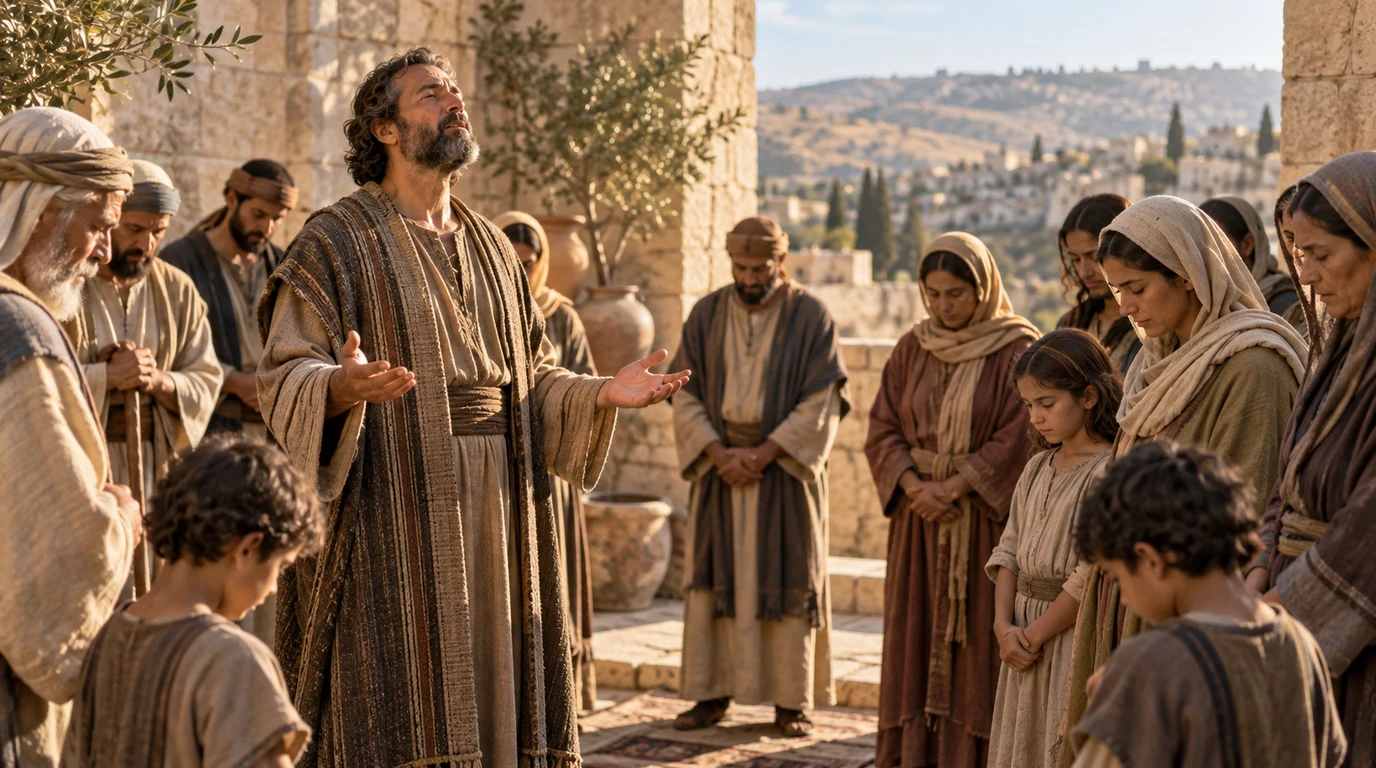
A leader can feel pressure to sound certain before there is any reason for certainty. Families, coworkers, and church communities often look to one person for a clear answer. Admitting confusion may seem like letting everyone down. In 2 Chronicles 20, however, a king stands before his people and tells God that he does not know what to do.
Jehoshaphat's prayer is memorable because it makes room for both responsibility and limitation. He neither abandons the people nor pretends that he can rescue them. His example invites us to consider a searching question: what would change if we brought our limits into prayer instead of hiding them behind confident words?
The sentence a king was willing to say
As enemy forces approached Judah, Jehoshaphat gathered with the people to seek the Lord. Near the end of his prayer, he named the situation without making it smaller:O our God, wilt thou not judge them? for we have no might against this great company that cometh against us; neither know we what to do: but our eyes are upon thee. 2 Chronicles 20:12 (KJV)The admission matters because it is public. Jehoshaphat speaks as king, in the assembly, where others can hear him acknowledge that his strength and judgment are insufficient. He does not need to protect an image of having every answer before he can lead people toward God. Notice also where the sentence ends. His attention turns toward the Lord. The uncertainty remains real, but it is no longer the only reality in view. This is prayer that tells the truth about human weakness while remembering whom it addresses.
Fear did not disqualify him from seeking God
Earlier, 2 Chronicles 20:3 says that Jehoshaphat feared and set himself to seek the Lord. Scripture records both responses together. The story gives us no reason to imagine a ruler who was naturally untouched by danger. He also proclaimed a fast, and people came from Judah's cities to ask for God's help. Those details belong to a national emergency in the biblical narrative. The enduring invitation is to seek God honestly, without waiting until every uneasy feeling has disappeared. For someone carrying responsibility today, that can begin with a plain admission: I am afraid of making the wrong decision. Bringing that concern to God creates space to seek wisdom, listen carefully, and acknowledge what still needs to be learned.The people were participants, not an audience
And all Judah stood before the Lord, with their little ones, their wives, and their children. 2 Chronicles 20:13 (KJV)This small detail widens our view of the scene. The crisis affected households, including children. The king's prayer took place within a gathered community whose members shared the danger and the need for help. Then the Spirit of the Lord came upon Jahaziel, a Levite, in the congregation, as 2 Chronicles 20:14 records. The king was not the only person through whom direction came. Jehoshaphat had spoken, but he also needed to receive what God said through someone else. There is a practical challenge here for anyone accustomed to being the person in charge. Honest leadership leaves room for other voices. A parent can listen to a child's concern. A team leader can welcome a colleague's correction. A church leader can ask the congregation for prayer without turning every uncertainty into a performance.
A promise for Judah must be read in its setting
Through Jahaziel, God told Judah that this battle belonged to him. The people were instructed to go out the next day, take their position, and witness his deliverance. In 2 Chronicles 20:17, the promise that they would not need to fight was given to Judah and Jerusalem in this particular crisis. The chapter later describes the opposing forces turning against one another. Judah returned to Jerusalem with joy, and the narrative credits God with giving the kingdom rest. These events show God's ability to deliver his people; they do not supply a formula that guarantees our preferred outcome whenever we repeat the king's prayer. The instructions also required a response. Judah still went out as directed. Trusting God did not mean treating his words as an excuse to ignore the next task. When applying the passage, we should resist labeling every difficult person an enemy to be defeated. A disagreement at home or work is not the same situation as the invading forces in this chapter. We can learn humility and dependence without placing ourselves into every role in the story.The chapter keeps the king's later failure in view
It is tempting to finish reading with the celebration. Yet 2 Chronicles 20:35-37 records Jehoshaphat's later partnership with Ahaziah, a king described as acting wickedly. The shipbuilding venture ended in loss, and the prophetic explanation connected that outcome to the alliance. The account preserves both a remarkable moment of dependence and a later failure of judgment. One faithful prayer did not make Jehoshaphat incapable of a poor decision. For readers, this means that yesterday's experience of God's help cannot replace today's need for discernment. Remembering this ending keeps the story human. We can receive instruction from Jehoshaphat without treating him as flawless, and we can give thanks for help received without assuming that every future plan has God's approval.A simple way to practice honest responsibility
Read the whole chapter before choosing one sentence to carry into your day. Then consider these questions in prayer:- Name the limit. What do you actually know, and what are you only guessing?
- Include the people affected. Who needs an opportunity to speak or ask a question?
- Receive help. What wise counsel or practical support have you been reluctant to seek?
- Take the next responsible step. What can you do faithfully without pretending to control the result?