The Baptism of Jesus: A Sign of Mission and the Inauguration of the Kingdom
The Baptism of Jesus: A Sign of Mission and the Inauguration of the Kingdom
The baptism of Jesus is one of the central events of the Gospels. More than a simple ritual, it marks the beginning of Christ’s public ministry and the inauguration of the Kingdom of God on earth.
In this article, we’ll explore the biblical meaning of Jesus’ baptism, how it reveals the Messiah’s identity, its relationship to the Holy Spirit, and how this moment signals the calling of every Christian to live in the Kingdom of God.
Where and how did the baptism happen?
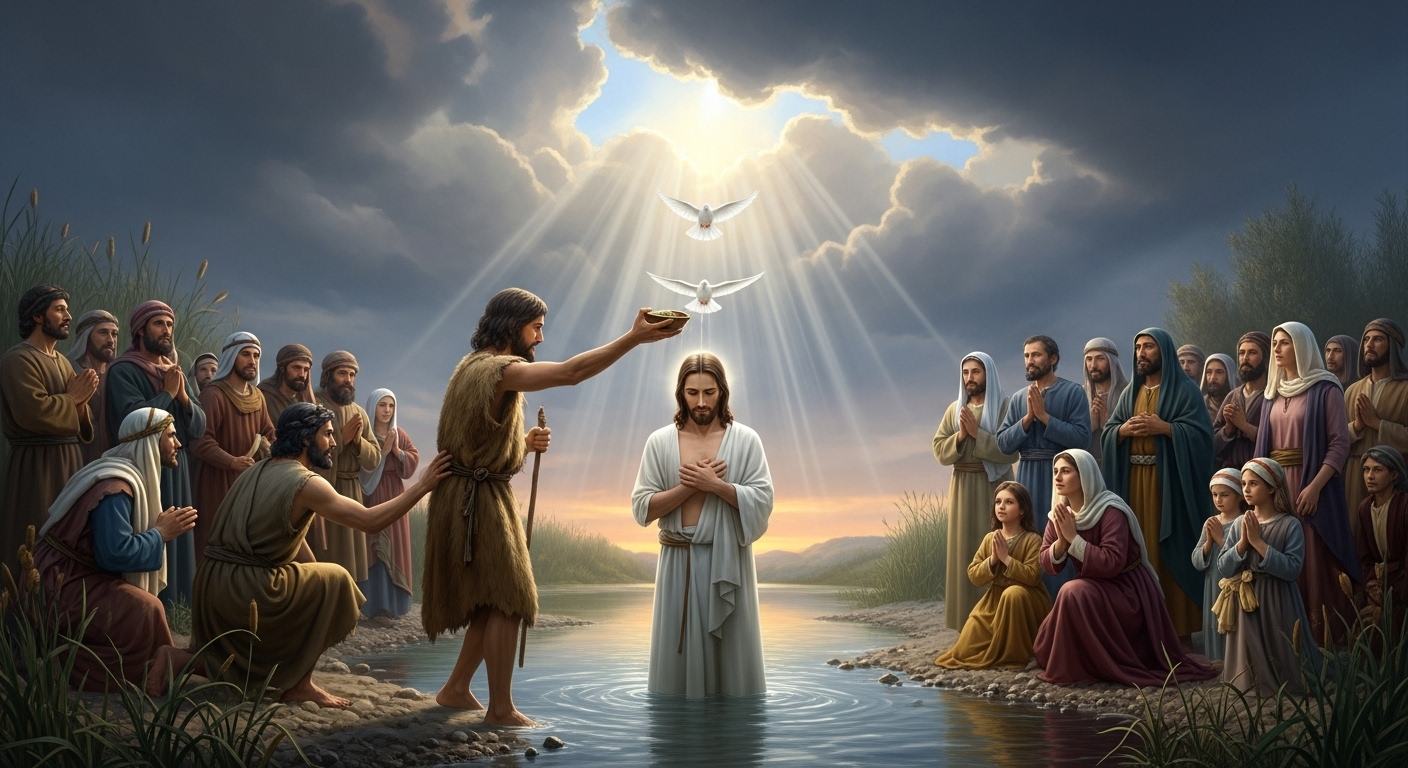
The baptism of Jesus is recorded in Matthew 3:13–17, Mark 1:9–11, and Luke 3:21–22. Jesus came to John the Baptist at the Jordan River, where John was baptizing as a sign of repentance and purification. Initially John hesitated, recognizing Jesus’ holiness, but Jesus insisted, saying it was necessary “to fulfill all righteousness.”
At that moment the heavens opened, the Holy Spirit descended upon Jesus in the form of a dove, and a voice from heaven declared: “This is my beloved Son, with whom I am well pleased.” This scene not only launches Jesus’ public ministry but also serves as a model and sign for all believers of what it means to embrace God’s mission.
The biblical meaning of Jesus’ baptism
- Inauguration of the Kingdom of God: The baptism signals the beginning of Jesus’ Kingdom mission—teaching, healing, freeing, and calling disciples.
- Messianic identity: The Father’s voice publicly reveals Jesus as the Son of God, affirming His authority and mission.
- Confirmation by the Holy Spirit: The Spirit’s descent signifies divine anointing and empowerment for ministry.
- Example for Christians: Though sinless, Jesus models obedience, humility, and submission to the Father’s will.
- Call to personal mission: As Jesus begins His mission with this symbolic act, every Christian is likewise called to live out identity and purpose in God.
Baptism as a sign of mission
Jesus’ baptism shows that Christian life is intrinsically missional. He inaugurates the Kingdom with concrete actions—proclaiming good news, healing the broken, setting captives free—and invites others into that work. The elements of the moment—water, the Spirit, and the Father’s declaration—point to a threefold call:
- Obey God’s will even in simple or humbling circumstances.
- Rely on the Holy Spirit’s power to fulfill the mission and live an authentic faith.
- Bear public witness to identity and purpose, becoming an example within the community of faith.
Practical lessons for Christians
- Obedience: Follow God’s will even when you don’t fully understand the why.
- Humility and example: The Son of God submitted to a symbolic rite—teaching us the beauty of humble obedience.
- Personal calling: Baptism reminds us each believer has a specific calling and mission in God’s Kingdom.
- Presence of the Spirit: Every mission must be guided, empowered, and sustained by the Holy Spirit.
Frequently asked questions about Jesus’ baptism
Why was Jesus baptized if He had no sin?
Not for repentance, but to “fulfill all righteousness,” publicly identifying with sinners and modeling obedience for believers.
Why is the Spirit’s descent important?
It confirms Jesus’ ministry and symbolizes divine empowerment for all mission.
Is baptism required for Christians?
Jesus commanded His followers to be baptized (cf. Matthew 28:19) as the public sign of repentance, faith, and commitment to Him. Christian traditions may differ on timing and mode, but baptism is the normative entrance sign into the community of faith.
How does baptism reveal Jesus’ identity?
The Father’s voice—“This is my beloved Son”—publicly legitimizes Jesus’ messianic authority.
Bible passages for further study
- Matthew 3:13–17 — Jesus’ baptism and the Father’s declaration.
- Mark 1:9–11 — The beginning of Jesus’ public ministry.
- Luke 3:21–22 — The baptism and the manifestation of the Spirit.
- John 1:29–34 — John the Baptist identifies Jesus as the Lamb of God and the Messiah.
- Acts 1:8 — The link between the Spirit’s empowerment and the Church’s mission.
Conclusion
The baptism of Jesus is far more than a symbolic rite. It inaugurates the Kingdom of God, reveals the Messiah’s identity, and sets a pattern of obedience, humility, and mission for every believer. Studying this event helps us grasp our own calling, the necessity of the Spirit’s presence, and the call to live an active, conscious faith.
If this article blessed you, share it with friends and family!