The Story of Jonah and the Great Fish: What Really Happened?
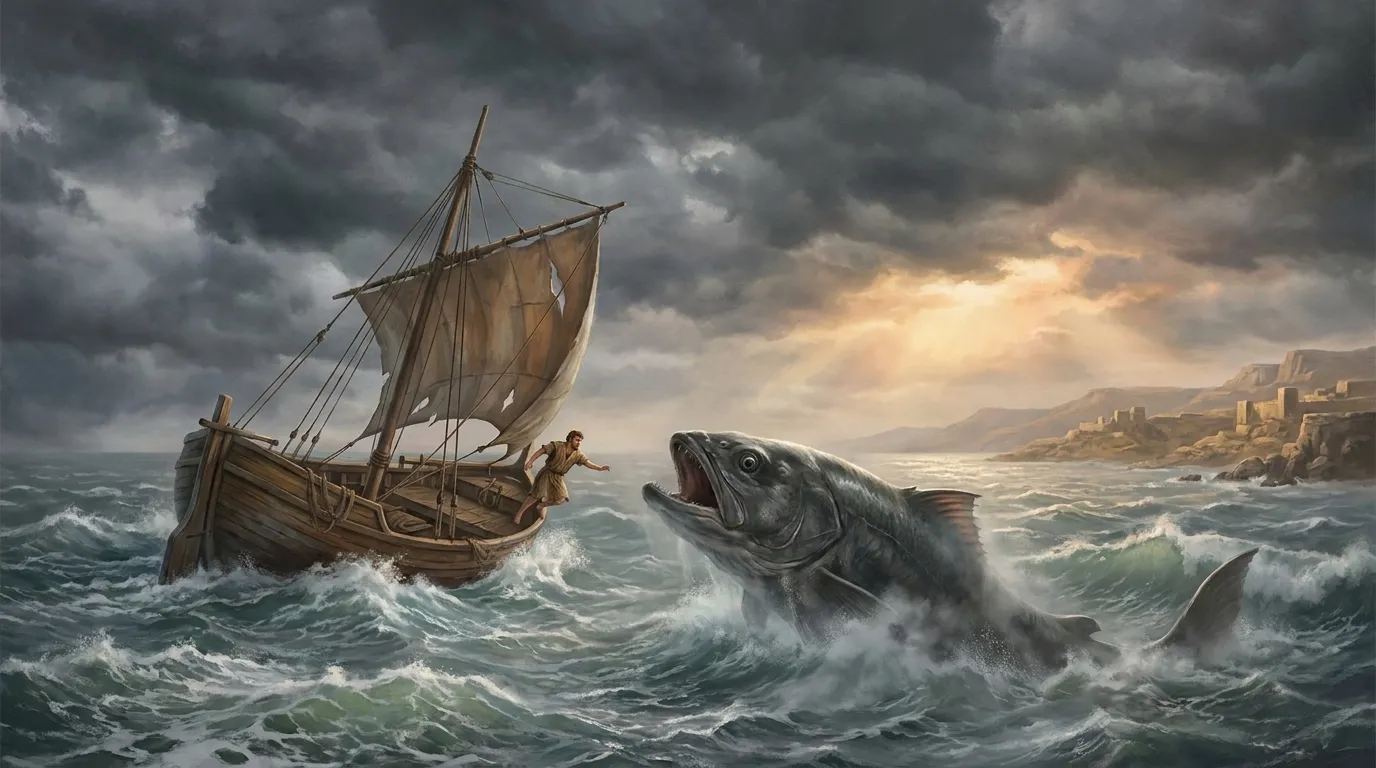
The story of the prophet Jonah being swallowed by a great fish is often reduced to a simple lesson about disobedience or debated only as a question of marine biology. However, the biblical text carries deep theological meaning. It reveals the sovereignty of God, the seriousness of His judgment, His mercy toward repentant nations, and an important prophetic sign pointing to the death and resurrection of Jesus Christ.
In this article, we will explore the historical weight of Jonah’s mission to Nineveh, the spiritual meaning of his flight, the miracle in the depths, and how this story speaks to our faith today.
The Historical Context: Nineveh and the Assyrian Threat
Jonah, son of Amittai, ministered in Israel during the reign of Jeroboam II, a period of material prosperity but deep spiritual decline. God’s command was clear: Jonah was to go to Nineveh and preach against it because its wickedness had come up before the Lord.
Nineveh was the heart of the Assyrian Empire, a military superpower known for violence, cruelty, and oppression. For Israel, Assyria represented a direct and terrifying threat.
Jonah’s decision to flee to Tarshish was not merely fear of danger. It was an act of rebellion. Jonah knew God’s character. He knew that if the people of Nineveh repented, God could show mercy and spare them. The prophet preferred to run away rather than see divine mercy extended to Israel’s enemies.
The Great Fish: Judgment, Mercy, and God’s Sovereignty
The central miracle of the story is God’s sovereign intervention. Jonah 1:17 says that the Lord appointed a great fish to swallow Jonah. This was not a random event, but an act of divine authority over creation.
The great fish became both an instrument of discipline and preservation. Jonah was brought down into the depths, yet his life was not destroyed. God used the very place of judgment to become a place of prayer, repentance, and restoration.
Jonah in the Depths
In Jonah chapter 2, the prophet prays from inside the fish. His words describe an experience of deep anguish, as if he had descended to the realm of death. He speaks of waters surrounding him, the deep closing over him, and seaweed wrapping around his head.
Jonah understood that his suffering was the result of rebellion. Yet, in that dark place, he cried out to God. His prayer shows that no place is too deep for the mercy of the Lord to reach.
When the fish vomited Jonah onto dry land, it marked a moment of physical deliverance and spiritual restoration. God preserved Jonah’s life and renewed his mission.
The Sign of Jonah and Jesus Christ
The story of Jonah becomes even more significant when Jesus Himself refers to it. In Matthew 12:40, Jesus says:
“For as Jonah was three days and three nights in the belly of a great fish, so the Son of Man will be three days and three nights in the heart of the earth.”
Jesus presents Jonah’s experience as a prophetic sign of His own death, burial, and resurrection. Just as Jonah came out of the depths after three days, Christ would rise from the grave in victory.
In Matthew 12:41, Jesus also says that the people of Nineveh will rise in judgment against that generation because they repented at Jonah’s preaching, while Someone greater than Jonah stood before them and was rejected.
Practical Lessons from Jonah’s Story
The story of Jonah is not only about a prophet, a great fish, and a city. It also confronts the condition of the human heart before God.
1. We Cannot Run from God
Jonah tried to escape the presence of the Lord, but God’s sovereignty reaches everywhere. Like Jonah, we may try to avoid God’s calling, but His will cannot be escaped. Running from God only leads to deeper struggle.
2. God’s Mercy Is Greater Than Human Prejudice
Jonah did not want Nineveh to receive mercy. His heart was limited by national hatred and spiritual pride. The story teaches that salvation belongs to the Lord, and God’s grace can reach even those we may consider undeserving.
3. Obedience Must Be Joined with Compassion
Jonah eventually preached to Nineveh, but his heart still lacked compassion. This warns us that it is possible to obey outwardly while remaining inwardly resistant to God’s heart of mercy.
4. Repentance Can Change the Course of Judgment
The people of Nineveh responded to Jonah’s message with repentance. Their response shows that when people humble themselves before God, mercy is available.
Conclusion
The story of Jonah and the great fish reveals a sovereign God who rules over nature, nations, and human hearts. It teaches us about judgment, mercy, repentance, and mission. Above all, it points us to Jesus Christ, the One greater than Jonah, who entered death and rose again to bring salvation to all who believe.
Jonah’s story challenges us to obey God’s call, reject spiritual pride, and proclaim His mercy with compassion.
If this Bible story blessed you, share it with your friends, family, and study groups so more people can understand the Word of God.