The Symbolic Meaning of Jewish Feasts in the New Testament
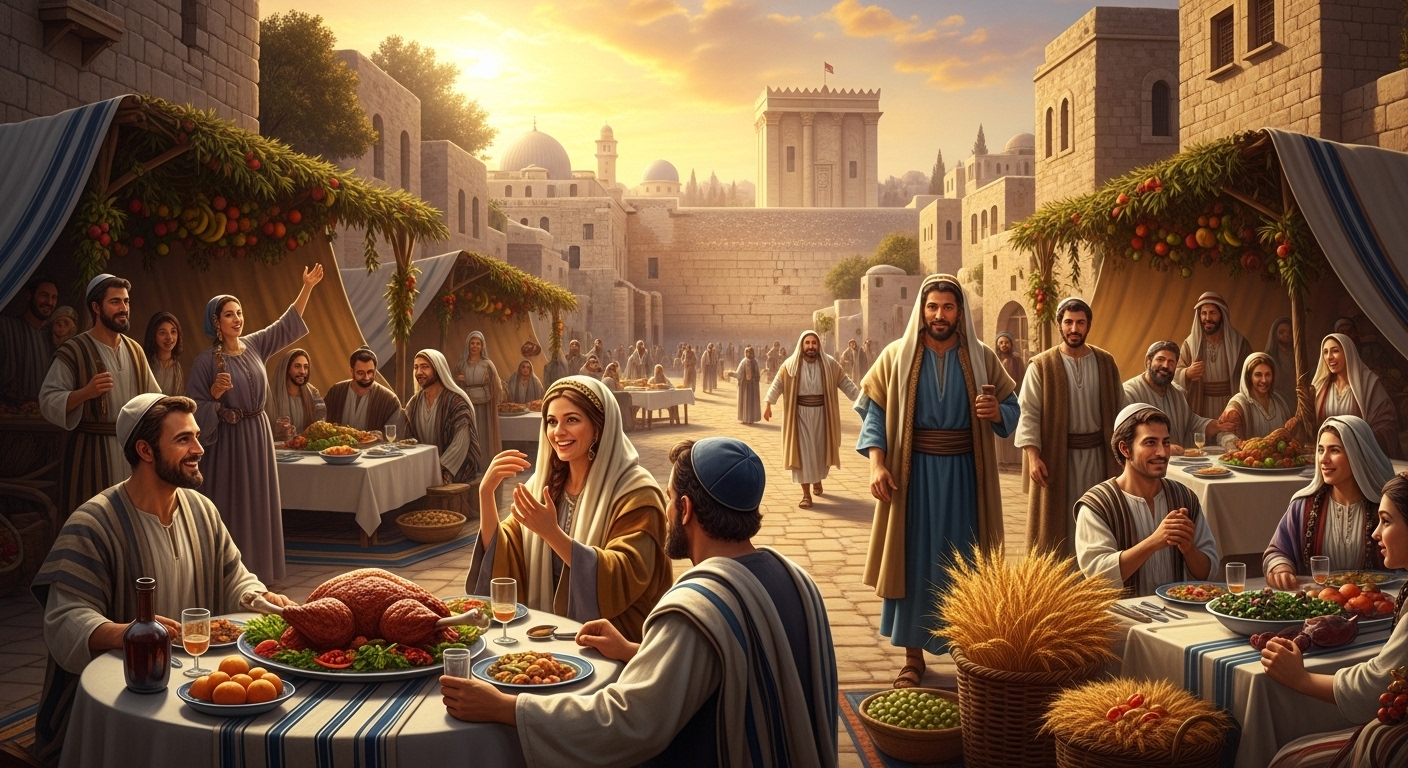
The Symbolic Meaning of Jewish Feasts in the New Testament
Jewish feasts have been celebrated for millennia, rooted in the Old Testament, and they carry spiritual significance that extends into the New Testament. These celebrations reveal God’s plan of redemption and point to the mission of Jesus Christ.
In this article, we will explore the biblical meaning of Jewish feasts, how they connect with the work of Jesus, their symbolic importance in the New Testament, and how they continue to teach spiritual principles for Christians today.
Historical context of Jewish feasts
The people of Israel were given several feasts by God through the Law of Moses, such as Passover, Pentecost, and Tabernacles. Each celebration carried a spiritual and practical purpose: remembering historical events, reinforcing national identity, and teaching about God’s covenant with His people.
In the New Testament, these feasts were not abolished but reinterpreted in light of Christ’s work. Jesus fulfilled their meaning, showing that they pointed to salvation, forgiveness, redemption, and the coming of the Holy Spirit.
The biblical meaning of the main feasts
Understanding the symbolic meaning of these feasts in the New Testament allows us to see how tradition and Christian mission are connected:
- Passover (Pesach): commemorated Israel’s liberation from Egypt. In the New Testament, it points to Christ as the Lamb of God whose sacrifice brings freedom from sin. Jesus instituted the Lord’s Supper during Passover, making the connection clear.
- Pentecost (Shavuot): originally celebrated the harvest and the giving of the Law at Sinai. In Acts 2, it becomes the day when the Holy Spirit descended on the disciples, launching the church’s mission.
- Tabernacles (Sukkot): recalled Israel’s journey in the desert and God’s provision. In Christ, it points to God’s dwelling among men and anticipates eternal communion in the new Jerusalem.
- Rosh Hashanah and Yom Kippur: focused on repentance and forgiveness in Judaism, they also echo in the New Testament message of reconciliation with God through Christ’s sacrifice.
Together, these feasts reveal a continuous narrative of salvation that moves from the Old Testament into the New, showing how God fulfills His promises.
Symbols and lessons for Christians today
The Jewish feasts carry spiritual lessons that remain relevant for Christians:
- Deliverance: Passover reminds us of redemption and freedom in Christ.
- The Spirit’s presence: Pentecost points to the church’s mission empowered by the Holy Spirit.
- Provision and protection: Tabernacles emphasizes God’s faithfulness through every season of life.
- Repentance and forgiveness: Rosh Hashanah and Yom Kippur highlight the call to reflection, reconciliation, and alignment with God’s will.
By studying these feasts, Christians gain a deeper understanding of Christ’s mission and see how Old Testament rituals become bridges to New Testament realities.
Frequently asked questions
Are all Old Testament feasts symbolic? Yes. Each has historical meaning but also points to spiritual lessons and God’s redemptive plan in Christ.
Should Christians celebrate Jewish feasts? It is not a requirement, but understanding their meaning enriches faith and biblical knowledge.
How do the feasts point to Jesus? Each feast highlights aspects of Christ’s work: deliverance, sacrifice, the Spirit’s presence, and reconciliation.
Why are they relevant today? They help interpret the Bible in its historical context and inspire practical Christian living.
Bible passages for study
- Exodus 12:1-30 – Institution of Passover and meaning of the lamb.
- Leviticus 23:15-22 – Instructions on Pentecost.
- John 1:14 – Jesus dwelling among us, fulfilling Tabernacles.
- Acts 2:1-4 – The Holy Spirit at Pentecost.
- Hebrews 9:11-15 – Christ as the fulfillment of Old Testament feasts and sacrifices.
Conclusion
The study of Jewish feasts in the New Testament reveals the depth of God’s plan of salvation. They show that each ritual and symbol was not merely tradition but a pointer to Christ, the work of the Holy Spirit, and the eternal hope of the church. Understanding them strengthens faith, teaches obedience, and inspires Christians to live with a greater sense of mission and gratitude.
If this article blessed you, share it with your friends and family!