What the Tower of Babel Means and the Origin of Languages
What the Tower of Babel Means and the Origin of Languages
The story of the Tower of Babel, recorded in Genesis 11:1-9, explains why God confused the languages and scattered people across the earth. This account speaks about pride, unity without God, and the divine call to true fellowship that values diversity.
Where in the Bible is the story?
The passage tells us that when humanity still spoke one language, people decided to build a city with a tower “that reaches to the heavens” to “make a name” for themselves and avoid being scattered. God intervened, confused their language, and dispersed them over the earth. The story contrasts human ambition with God’s sovereignty.
Historical and geographical context
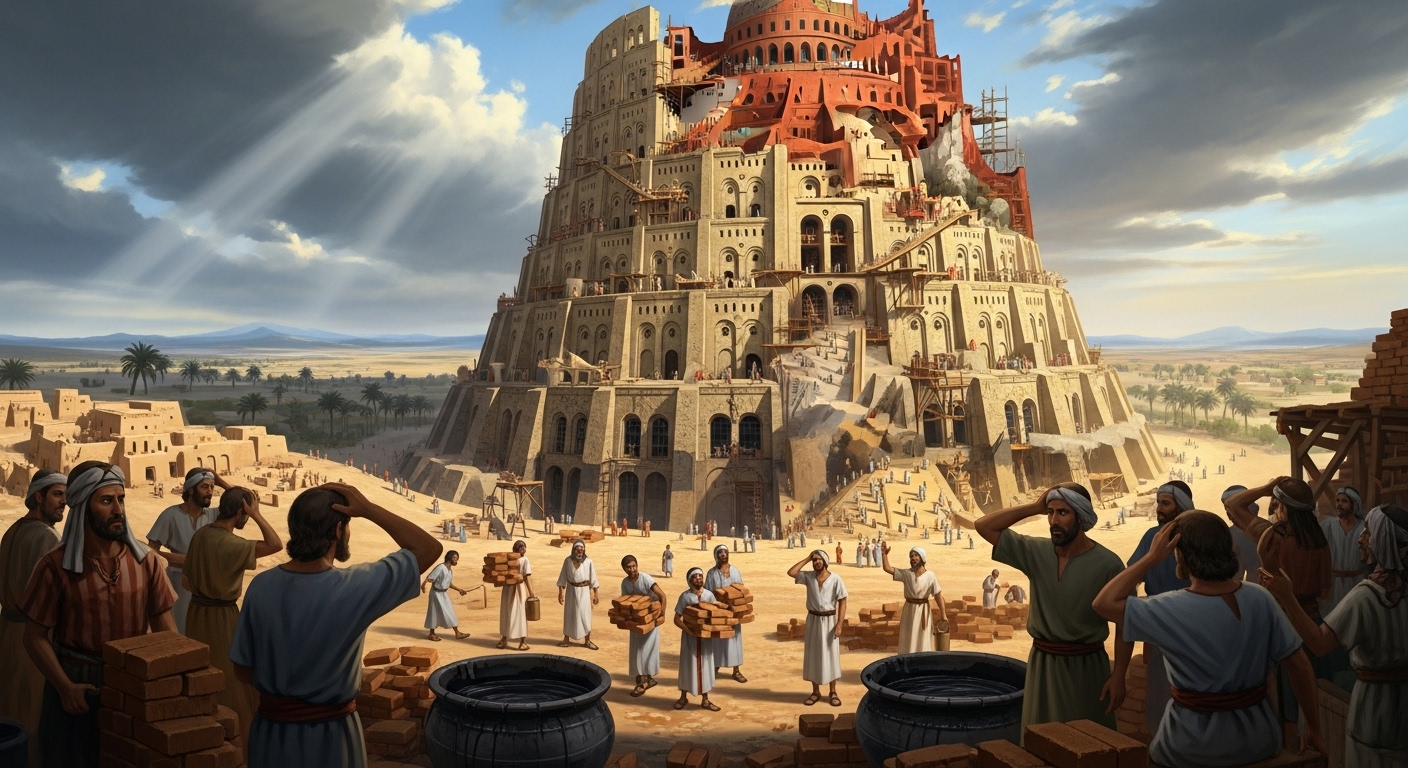
The Tower of Babel was built in the land of Shinar, corresponding to ancient Mesopotamia (modern Iraq). The name Babel later connects with Babylon, the biblical symbol of human power without submission to God. The mention of baked bricks and tar reflects the construction style of that region, resembling ziggurats—stepped pyramid temples. This shows the Bible places the story in real cultural settings, while its ultimate message is spiritual: without God, even the greatest projects lead to confusion.
The spiritual meaning of the Tower of Babel
The tower represented collective pride. Their desire to “make a name” reveals a search for autonomy and glory apart from God. The story also shows that unity, when not aligned with God’s purposes, can become destructive. God’s action was not only judgment but also preventive grace: by confusing their speech, He restrained greater harm and ensured humanity fulfilled the mandate to fill the earth.
The origin of languages: Bible and science
According to Scripture, the diversity of languages came from God’s direct intervention. From a scientific perspective, languages developed gradually, forming families such as Indo-European and Semitic. These views can be complementary: the Bible reveals the spiritual purpose, while science explains the historical process.
Babel and Pentecost: from confusion to reconciliation
Babel finds a redemptive parallel in Acts 2. At Babel, God confused languages and scattered humanity. At Pentecost, the Holy Spirit enabled the disciples to speak in other tongues, and everyone understood the gospel message. Babel symbolizes division caused by pride, while Pentecost represents true unity created by the Spirit of God.
Practical lessons for the Church
- Unity must be centered in Christ, not in human ambition.
- God values cultural and linguistic diversity, but redeems it for His purpose.
- The story reminds us of the importance of collective humility and dependence on God in our projects.
- Planning and strategy matter, but only succeed when aligned with God’s will.
Frequently Asked Questions
Did the Tower of Babel really exist? The focus of the Bible is spiritual, but structures like ziggurats help contextualize the narrative.
Is Babel the same as Babylon? Yes, the names are connected. In the Bible, Babylon represents human power without God.
Is God against cities or progress? No. The issue is human projects built for self-exaltation without submission to Him.
Why did God confuse the languages? To restrain human pride and ensure people spread across the earth.
Bible passages for study
- Genesis 11:1-9 – the main account of the Tower of Babel.
- Genesis 10:8-10 – early mention of Babel’s kingdom.
- Acts 2:1-12 – Pentecost as a redemptive counterpart.
- Revelation 17–18 – Babylon as a symbol of human systems opposed to God.
Conclusion
The Tower of Babel is more than the story of an unfinished tower. It is a warning against human pride and a reminder that true unity is only possible in Christ. While projects driven by vanity end in confusion, God’s plans lead to communion, reconciled diversity, and eternal life with Him.
If this article blessed you, share it with your friends and family!